
The short answer: the best needlepoint stitches for flowers are French Knots and the Woven Wheel for raised flower centers, the Long Stitch for smooth, curving petals, the Mosaic and Mosaic Diagonal stitches for small textured petals and leaves, the Chain Stitch for stems and outlines, and the Upright Cross-Stitch or Mosaic Checker for stylized, graphic blooms. The trick is contrast: pair one raised, textured stitch for the center with a flatter, smoother stitch for the petals, and your flowers lift off the canvas.
Below you'll find each stitch with a diagram, a real example from one of our kits and, where we have one, a step-by-step video.
Which stitch for which part of the flower
| Part of the flower | Best stitches | Why |
|---|---|---|
| Flower centers | French Knots, Woven Wheel | Raised and tactile, like seeds or stamens |
| Large or curved petals | Long Stitch, Mosaic Diagonal | Stitches follow the shape and catch the light |
| Small petals and leaves | Mosaic Stitch | Compact, neat texture that fills tight spaces |
| Stems and outlines | Chain Stitch | A soft, flowing line |
| Stylized or graphic flowers | Upright Cross-Stitch, Mosaic Checker | Pattern and structure, great for modern florals |
| The background around them | See our guide to background stitches | A quiet background makes the flowers stand out |
1. Mosaic Stitch: for small petals and leaves
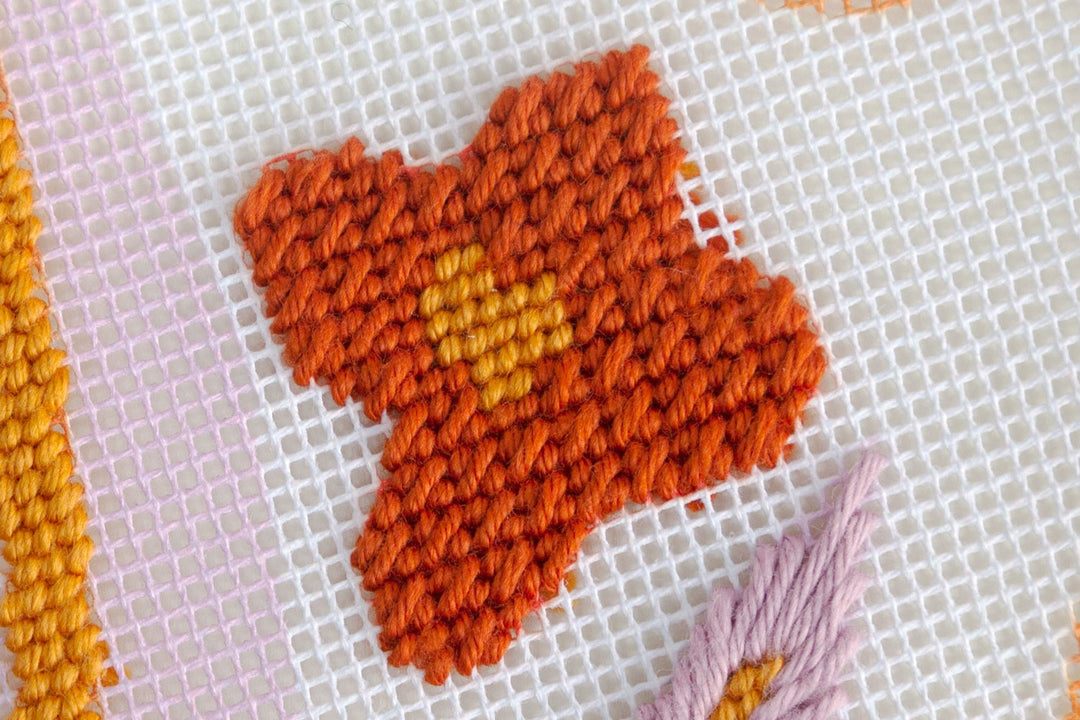
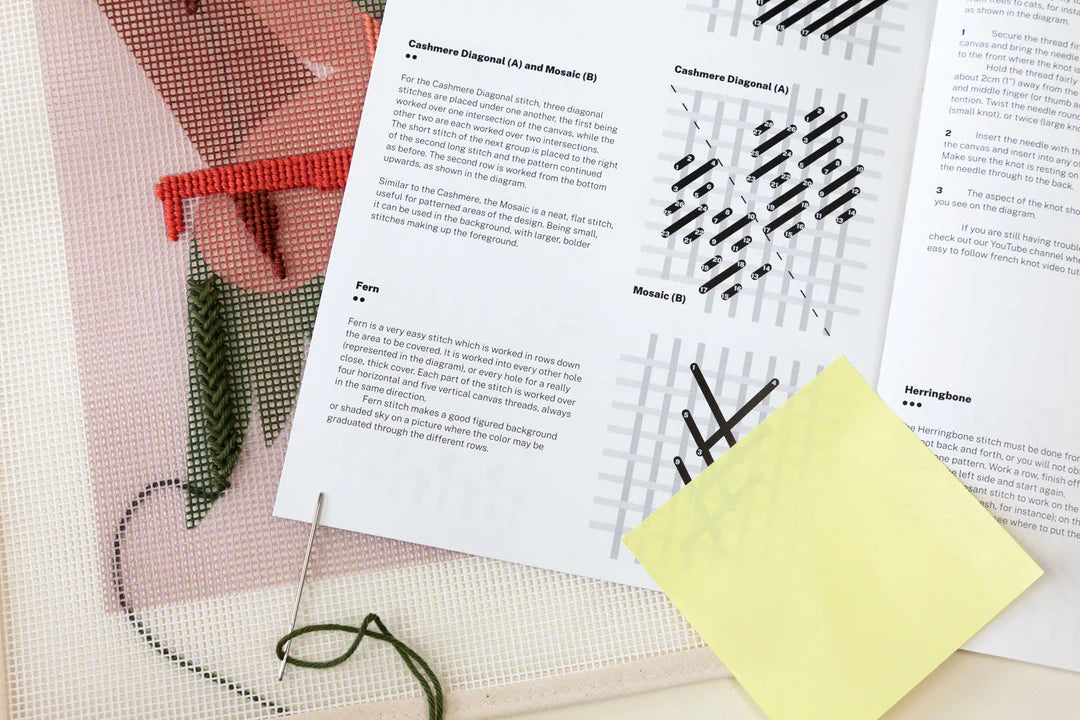
The Mosaic Stitch is a tiny square made of three diagonal stitches (short, long, short). Repeated, it creates a neat, slightly raised texture that is perfect for small petal shapes and leaves where a bigger stitch wouldn't fit.
- Fills small or irregular petals cleanly.
- Adds texture without being bulky.
- Easy to learn, so it's a good first decorative stitch.
Here's the diagram, with the stitch used on our Nadia Beginner Needlepoint Kit:

Mosaic Stitch video tutorial
2. Mosaic Diagonal Stitch: for petals with movement
The Mosaic Diagonal Stitch runs the mosaic pattern on the diagonal, so the texture flows across the shape instead of sitting in neat squares. Use it on curving petals or where neighboring petals should feel like they move in different directions.
- Gives petals a sense of movement and flow.
- Works well in multi-color florals, where each petal is a different shade.
- Covers medium areas faster than the classic mosaic.
Here's the diagram, with the stitch on our Happy Flowers Needlepoint Kit:

Mosaic Diagonal Stitch video tutorial
3. Mosaic Checker Stitch: for graphic, modern florals
The Mosaic Checker Stitch alternates mosaic squares with small blocks of tent stitch, creating a subtle checkerboard. It's a lovely choice for bold, stylized petals or flat, color-blocked flowers, where you want texture that still reads as clean and graphic.
- Adds pattern to large, flat petals without losing the shape.
- Suits modern, minimal and folk-inspired florals.
- Looks different in one color (subtle texture) or two colors (a clear checker).
4. French Knots: for flower centers and tiny buds
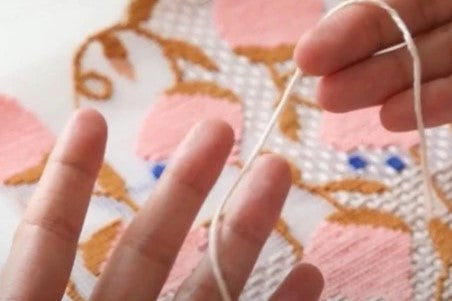
French Knots are small raised knots that sit on top of the canvas. Cluster them for the center of a daisy or a sunflower, or scatter them as tiny buds and berries. They are the quickest way to make a flower feel three-dimensional.
- Perfect for daisy, sunflower and poppy centers.
- Vary the size by wrapping the thread once or twice around the needle.
- Best on wall art and decor; on pieces that get handled a lot, keep them small and tight.
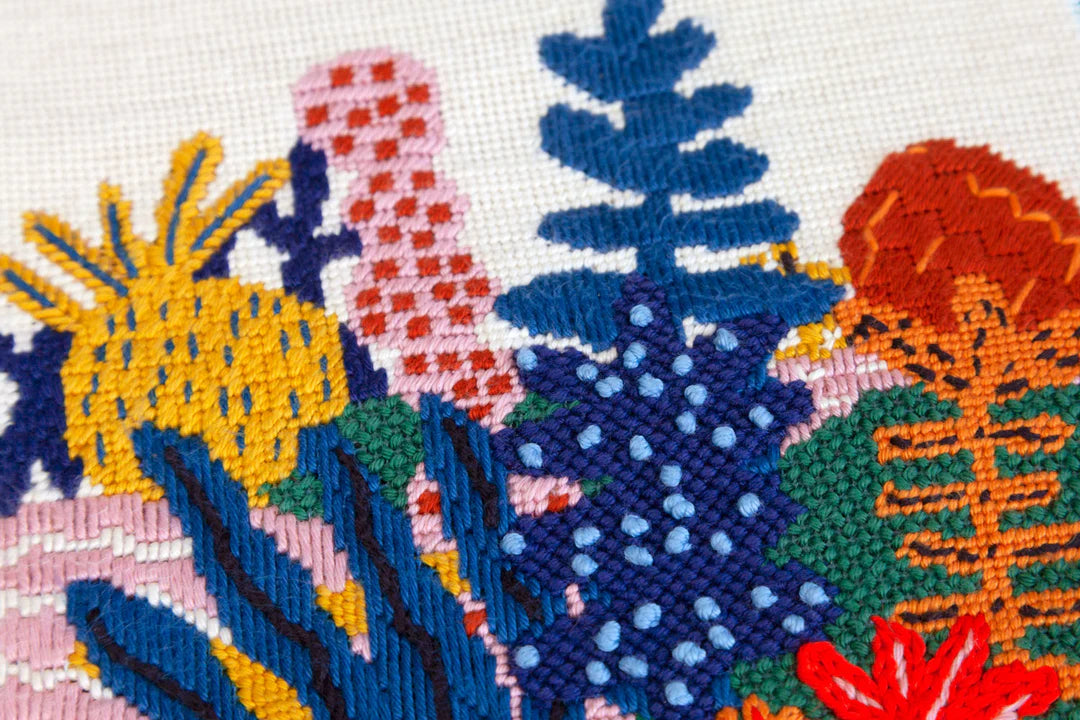
Here's the diagram, with French Knots on our Colorful Jungle, Tulips and Laura Flor needlepoint kits:


French Knot video tutorial
5. Woven Wheel: for round, full blooms
The Woven Wheel, also called the spider web stitch, starts with straight "spokes" and then weaves the thread over and under them in circles. The result is a raised, round shape that looks like a rose, a peony bud or the center of a sunflower.
- Creates a raised, circular flower in one go.
- Works for big and small blooms: just change the number and length of the spokes.
- Instant texture contrast next to flat petals.
Here's the diagram, with the stitch on our Sunflower Needlepoint Kit:

6. Long Stitch: for smooth, flowing petals
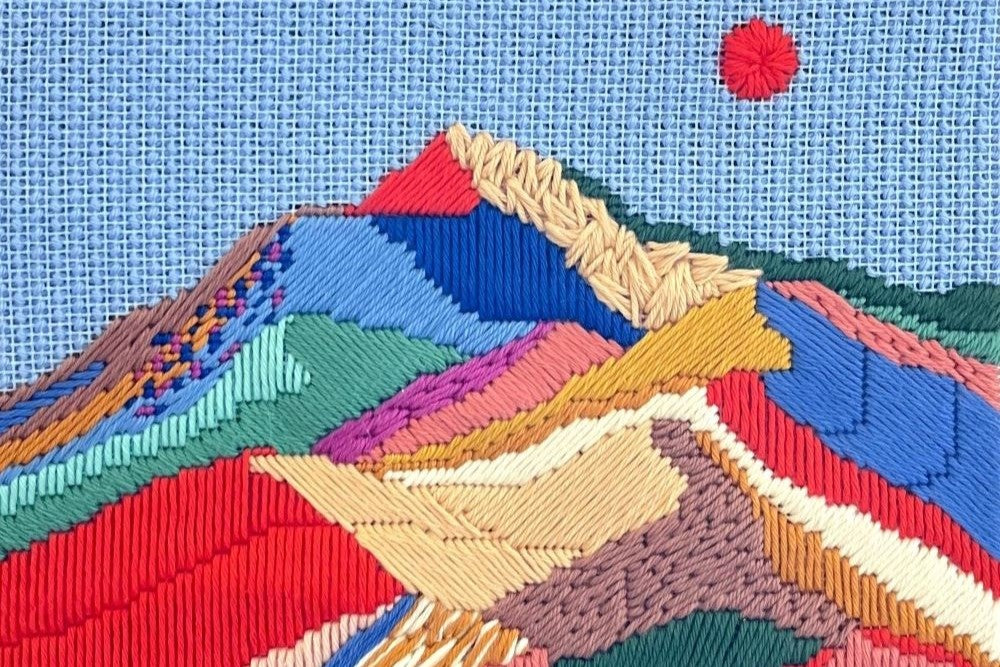
The Long Stitch (also called satin stitch) lays long, parallel threads over several canvas holes. Following the direction of the petal, it gives a smooth, silky surface that catches the light, ideal for large blossoms and long leaves.
- Follows the natural shape of petals and leaves.
- Great for shading: work neighboring rows in lighter and darker tones.
- Covers large areas quickly. Keep stitches short enough not to snag on cushions and other pieces you'll use every day.
Here's the diagram, with the stitch on our Happy Flowers kit and the Flower Girl stitch guide:

Long Stitch video tutorial
7. Chain Stitch: for stems and outlines
The Chain Stitch is a row of linked loops worked on top of the canvas. It draws soft, flowing lines, which makes it the natural choice for stems, tendrils and petal outlines.
- Follows curves that tent stitch can only step around.
- Outlines a petal to separate it from the background.
- Combines well with flat fillings for added depth.
Here's the diagram, with the stitch on our Garden of Joy Needlepoint Kit:

Chain Stitch video tutorial
8. Upright Cross-Stitch: for stylized flowers
The Upright Cross-Stitch is a small "plus" sign repeated across the area. It creates a tidy, bumpy texture that suits stylized flowers, patterned petals and folk-inspired motifs.
- Gives flat petals a crisp, structured texture.
- Works well in small areas and in a single color.
- Pairs nicely with smoother stitches like the Long Stitch.
Here's the diagram, with the stitch on our Happy Flowers, Colorful Jungle and Floral Study 2 kits:

Tips for stitching flowers
- Raised center, flat petals. The contrast between a French Knot or Woven Wheel center and smooth petals is what makes a flower pop.
- Follow the petal. Angle Long Stitch and Mosaic Diagonal stitches from the center outwards, the way real petals grow.
- Change the stitch, not just the color. Two petals in the same shade still look different in two different stitches.
- Keep the background calm. Basketweave or a quiet background stitch lets the textured flowers stand out.
- Finish the edges with tent stitch. Where a decorative stitch doesn't fit a curve, fill the gaps with small tent stitches. Our guide to compensation stitches explains how.
Frequently asked questions
What is the best needlepoint stitch for flower petals?
For large or curved petals, the Long Stitch gives the smoothest result. For small petals, the Mosaic Stitch fills tight shapes neatly, and the Mosaic Diagonal adds movement.
What stitch should I use for the center of a flower?
French Knots for a seeded, textured center (daisies, sunflowers, poppies) and the Woven Wheel for a round, raised center or a whole rose.
Which stitch is best for stems and leaves?
Chain Stitch for stems and outlines. For leaves, the Long Stitch angled like the leaf veins, or the Mosaic Stitch for small leaves.
Can beginners use decorative stitches on flowers?
Yes. The Mosaic Stitch, the Upright Cross-Stitch and the Long Stitch are all easy to learn. Try them on a beginner-level floral kit like Nadia or Floral Study 2, or browse our needlepoint kits for beginners. If you're brand new, start with our How to Needlepoint guide.
Do I need special thread for decorative flower stitches?
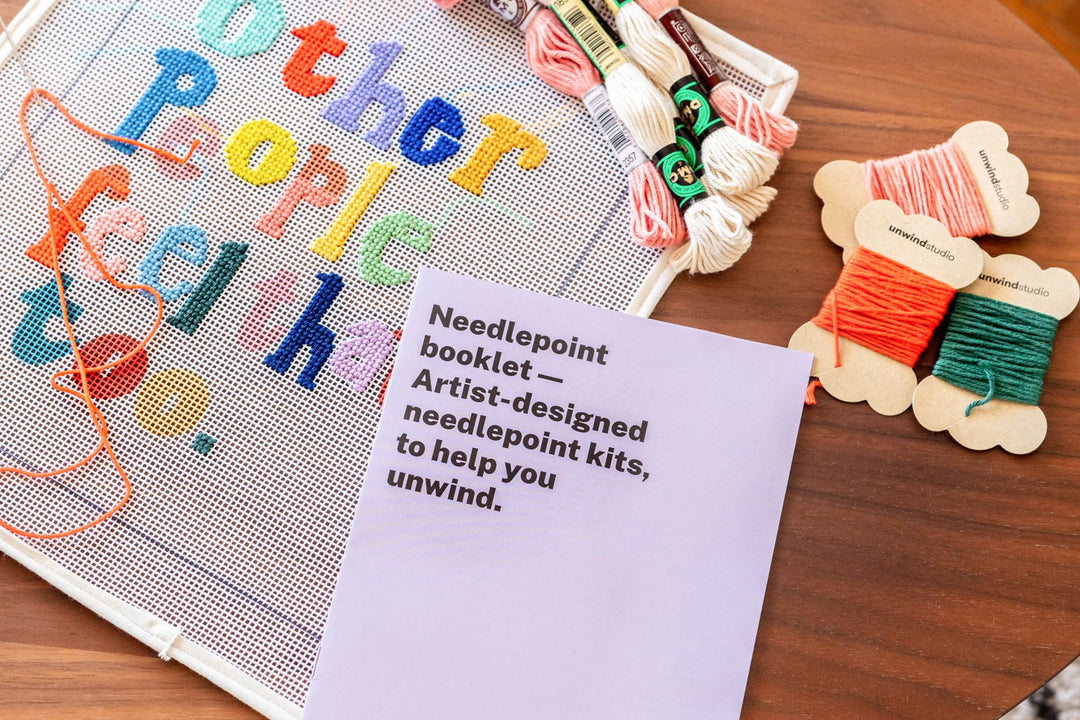
No. You can work these stitches with the same thread you use for tent stitch. Some, like French Knots and the Woven Wheel, use a little more thread, so if you run short on a kit, just message us.
Stitch a flower kit
Ready to try these stitches? Browse our flower needlepoint kits, modern florals designed in our studio and by artists from around the world. Many come with a free stitch guide that shows exactly which stitch goes where:
- Happy Flowers stitch guide
- Sunflower stitch guide
- Garden of Joy stitch guide
- Nadia stitch guide
- Flower Girl stitch guide
- Paper Flowers stitch guide
- Color Garden stitch guide
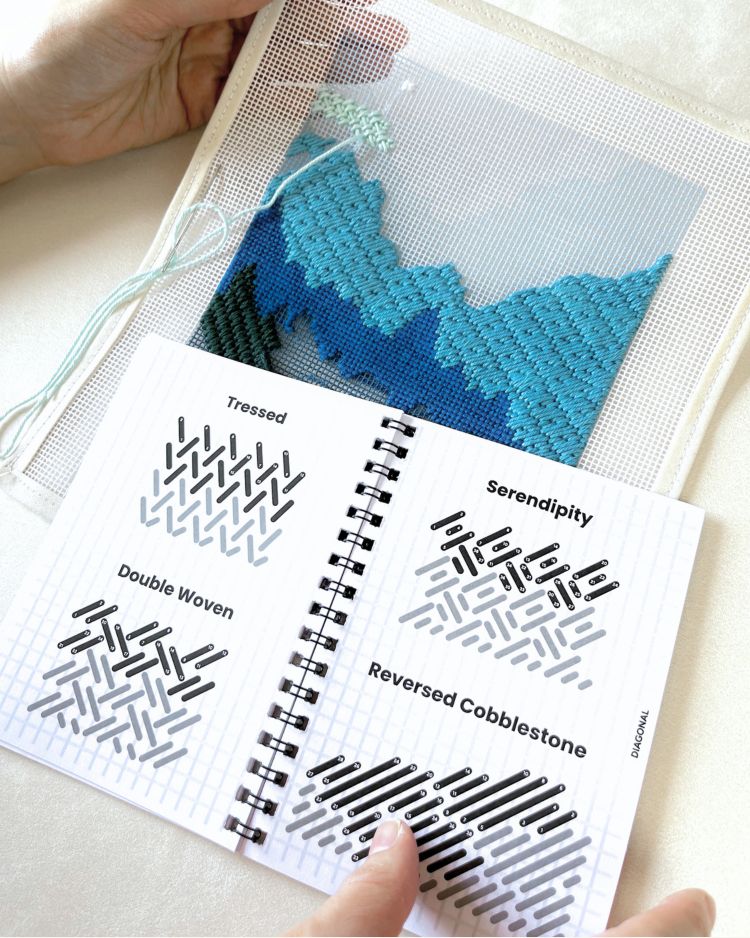
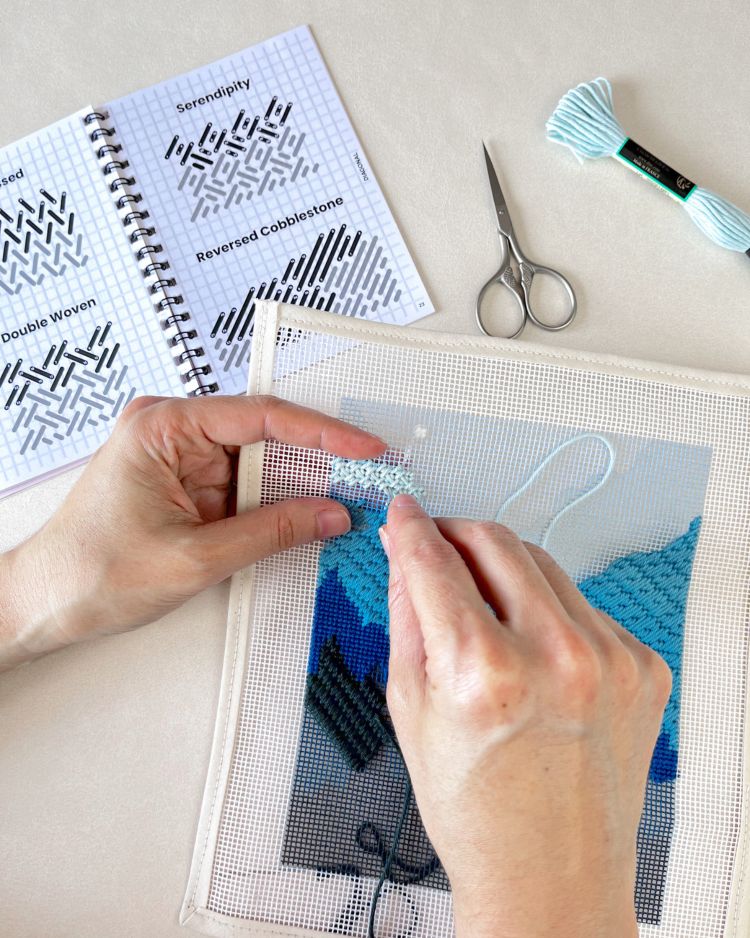
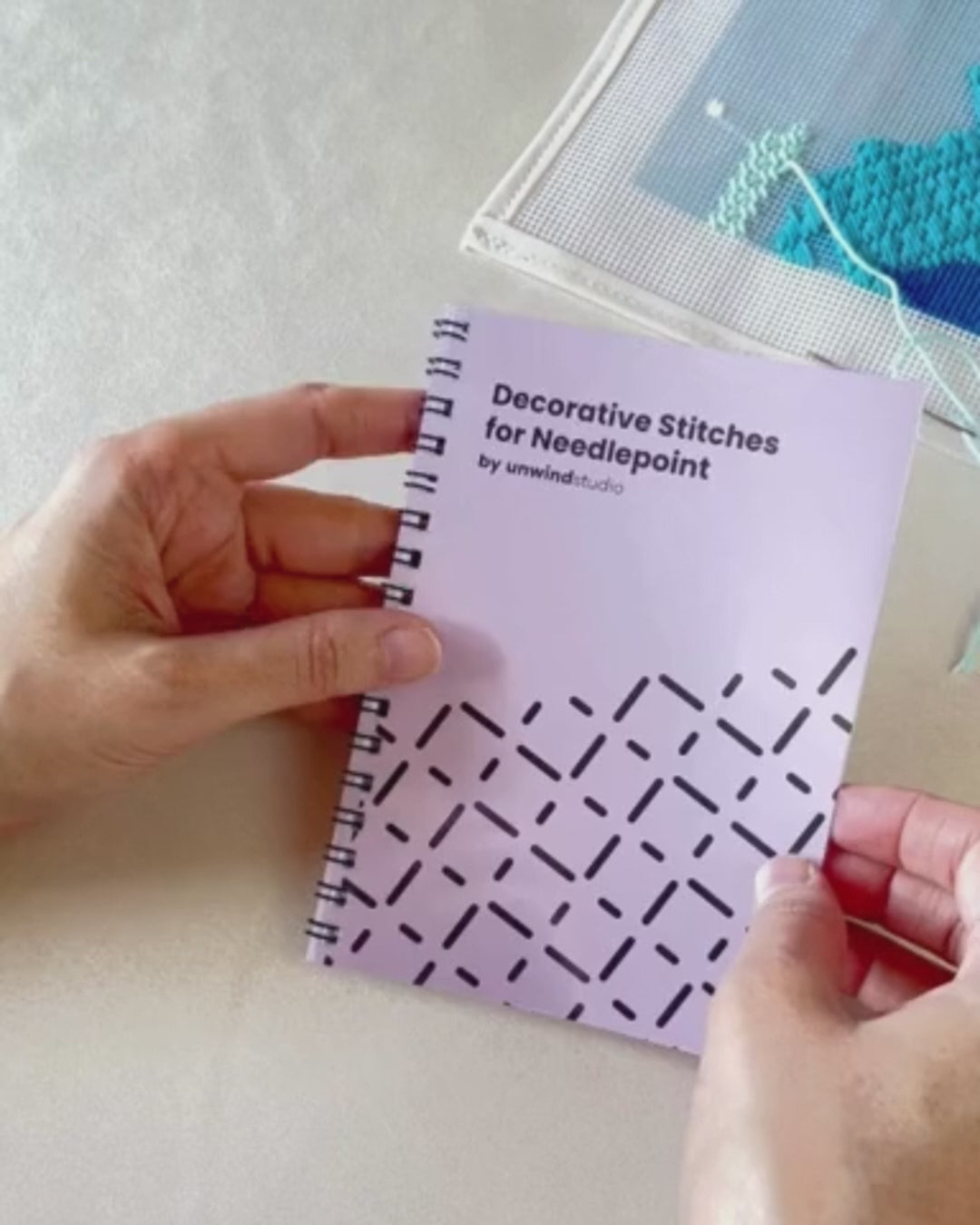
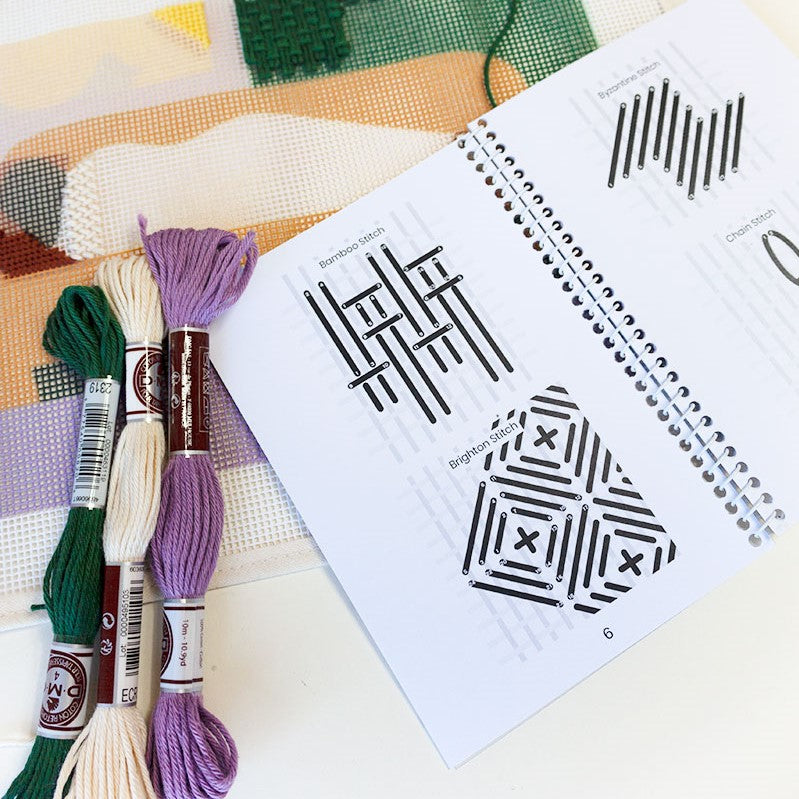
Want more stitches to grow your skills? Explore our stitch library and video tutorials or keep our Decorative Stitches booklet next to your project bag.