
When you’re stitching a scene that includes people, clothing reads as one of the fastest visual cues for character, era, and texture. A flat block of color can say “shirt”: the right stitch says “wool sweater". For figurative work (portraits, street scenes, markets, party scenes), choosing stitches that suggest fabric type, drape, and scale will instantly make garments look more realistic and tactile.
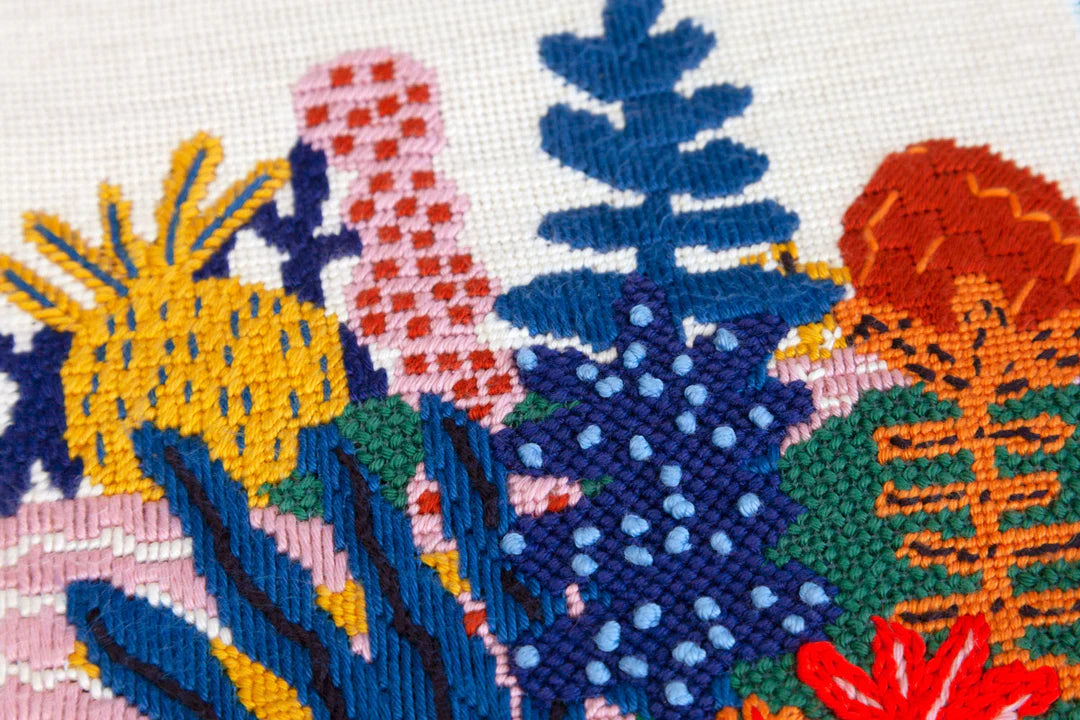
Using decorative/filling stitches (alongside tent stitch) lets you:
-
Suggest different fabric types (knit vs woven vs silky).
-
Add movement and folds with directional stitches.
-
Avoid “pixelated” flatness, textured fills read as real cloth from a distance.
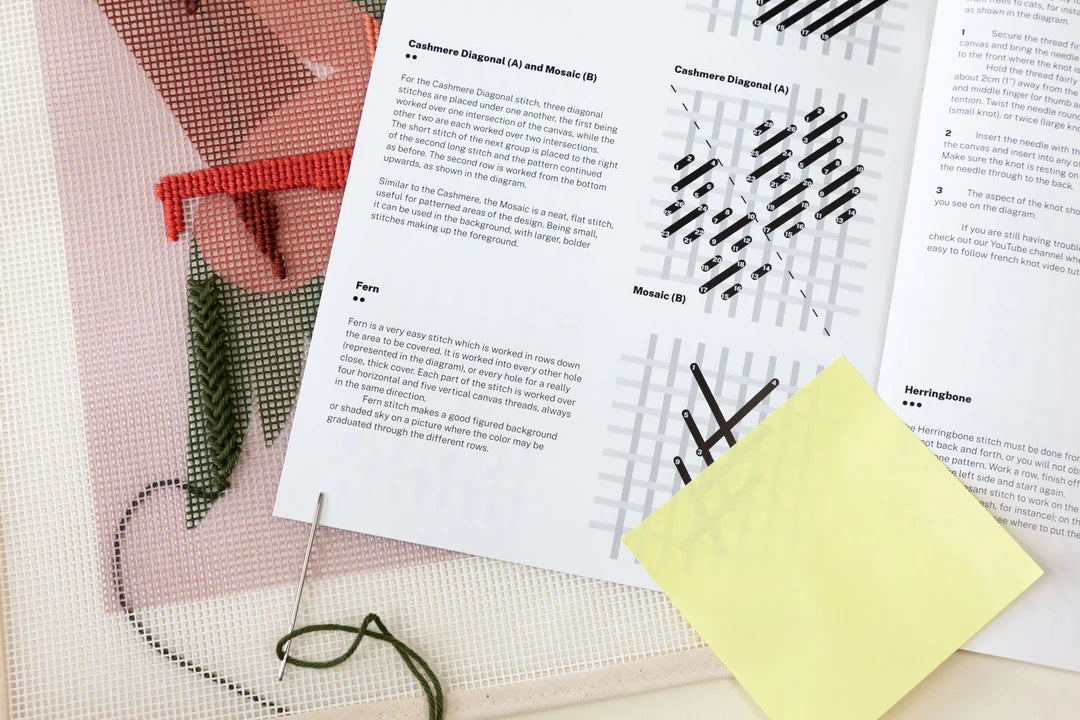
Below are five top stitches to use when stitching clothes on people, with notes on why they work, where to place them, and quick video/tutorial references.
1. Chain Stitch
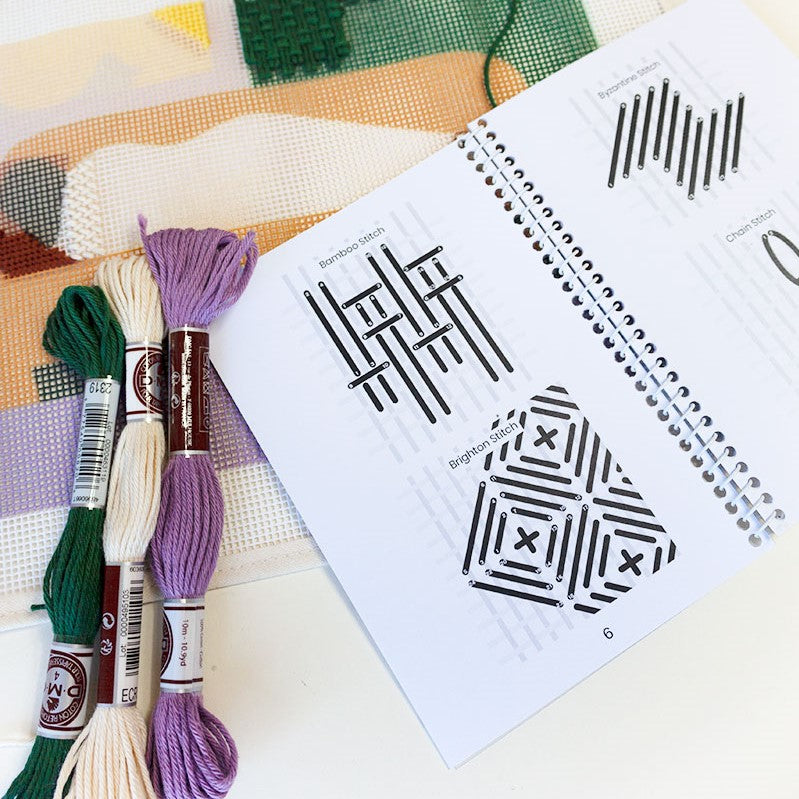
Chain stitch reads like seams, piping, and flowing decorative lines. It’s slightly raised but very flexible, so it moves well with fabric in the eye’s perception.

Featured: Sisterhood Needlepoint Kit
Why we love it for clothes:
-
Great for outlines, decorative seams, and stitch-suggested embroidery on blouses or collars.
-
Flexible; won’t “lock” a fold visually the way a bulky filling stitch might.
-
Can be worked in single lines (stems) or repeated for a filled, textured stripe.
Best for:
Collar edges, piping lines, floral stems on dresses, rowed trims on cuffs, or texture on sweaters, for example.
Watch the Chain Stitch video tutorial here:
2. Criss Cross Hungarian Stitch
Criss Cross Hungarian is a structured, woven-looking filling stitch composed of small groups that form a cross-weave effect. It creates a compact, slightly raised texture that suggests tweeds, textured knits, or embellished panels.

Featured: Nutcracker in the Snow Stocking Kit
Why we love it for clothes:
-
Produces a woven, fabric-like surface that reads like tweed or upholstery from a distance.
-
Excellent for small-scale patterning on jackets or skirts.
-
Strong coverage without being bulky if used in small motifs.
Best for:
Jacket panels, skirt patches, sweater yokes, or any area where you want “fabric” texture rather than flat color.
Watch a Criss Cross Hungarian video tutorial here:
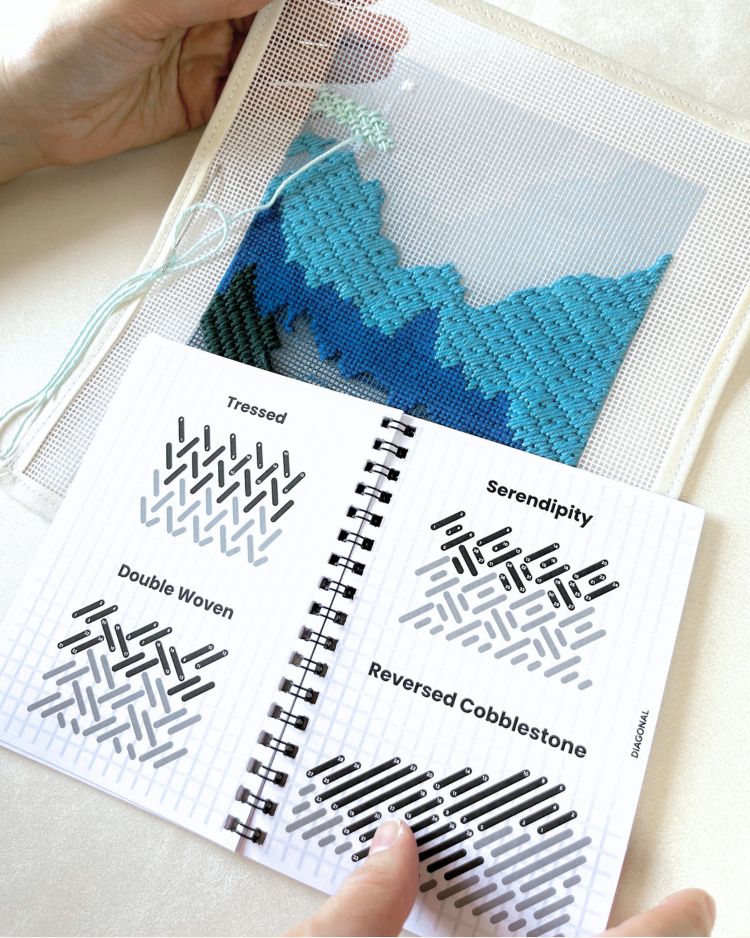
3. Tressed Stitch
Tressed Stitch creates a braided/knitted look, think cable-knit, so it’s one of the quickest stitches to suggest hand-knits, braided trims, or chunky sweater textures.

Why we love it for clothes:
-
Mimics knitted surfaces (braids, cables) better than many flat stitches.
-
Offers real dimensionality without excessive bulk if used in controlled areas.
Best for:
Sweaters, beanies, scarfs.
Watch the Tressed Stitch video tutorial here:
4. Kalem Stitch/Knitting Stitch
Kalem stitch or Knitting Stitch (sometimes shown as a vertical/diagonal column stitch) creates narrow ribbed columns that read like knitted ribs or vertical fabric ribs. It’s especially useful where you want the illustion of knit or vertical grain (think ribbed cuffs, sweater ribs, or corduroy-like effects).

Featured: Nutcracker in the Snow Stocking Kit
Why we love it for clothes:
-
Gives a knitted, ribbed appearance: excellent for scarves, sweater bodies, and knitwear details.
-
Works in columns, so it’s easy to match the direction of fabric.
-
Very adaptable: rotate the columns or change spacing for finer/coarser rib effects.
Best for:
Ribbed cuffs, sweater bodies, vertical stripes, and areas where you want subtle “grain.”
5. Wicker / Weaving
Wicker produces a basket-like or fabric-woven look. They’re brilliant when you want the garment to read as structured woven cloth, think linen jackets, basket-weave vests, or textured skirt panels.

Why we love it for clothes:
-
Suggests interlaced fabric and structure, great for tactile, visible garments.
-
Durable and distinct; works well on outerwear panels and on pieces that need strong visual texture.
Best for:
Structured jackets, vest panels, straw-hat or basket-like accessories, or bold textured areas on costumes.
Watch a Wicker / Weaving tutorial here:
Extra tips for stitching clothes:
-
Match stitch to fabric type. Use rib-like stitches (Kalem, Tressed) for knits; woven/weaving stitches for linens and jackets; chain for trims and piping.
-
Scale & mesh matter. Small figures need smaller stitches. Larger figures give you room for textured stitches without losing detail.
-
Direction = drape. Run stitches along the direction of fabric folds to suggest movement and gravity.
-
Contrast texture and color. A matte twill filling next to a shiny satin long stitch reads like wool next to silk. Use subtle sheen threads (silk, rayon) for glossy fabrics.
-
Work samples first. Try the stitch + thread + mesh on a scrap at the same scale as your figure to check readability.
You might also like...
- The Best Needlepoint Stitches for Skies
- Best Needlepoint Stitches for Background Areas
- Our favorite Needlepoint Decorative Stitches
Happy stitching :)