
Tent Stitch - Basketweave, Continental and Half-Cross
Mastering the Needlepoint Tent Stitch: Basketweave, Continental & Half-Cross by Unwind Studio
Best for: Beginners and advanced stitchers seeking the most versatile and foundational needlepoint stitch for backgrounds and detailed work.
Technique: Comparing the three variations of the Tent Stitch - Basketweave, Continental, and Half-Cross - to determine the best coverage and durability for your project.
Key Tip: Choose Basketweave for functional items (like belts or cushions) to prevent canvas distortion, and use Continental for small, isolated areas where diagonal rows aren't possible.
Mindfulness Note: The rhythmic, repetitive nature of the Tent Stitch is the fastest way to enter a flow state, allowing your mind to rest while your hands create a durable, handmade fabric.
Tent Stitch 101: Comparing Basketweave, Continental, and Half-Cross
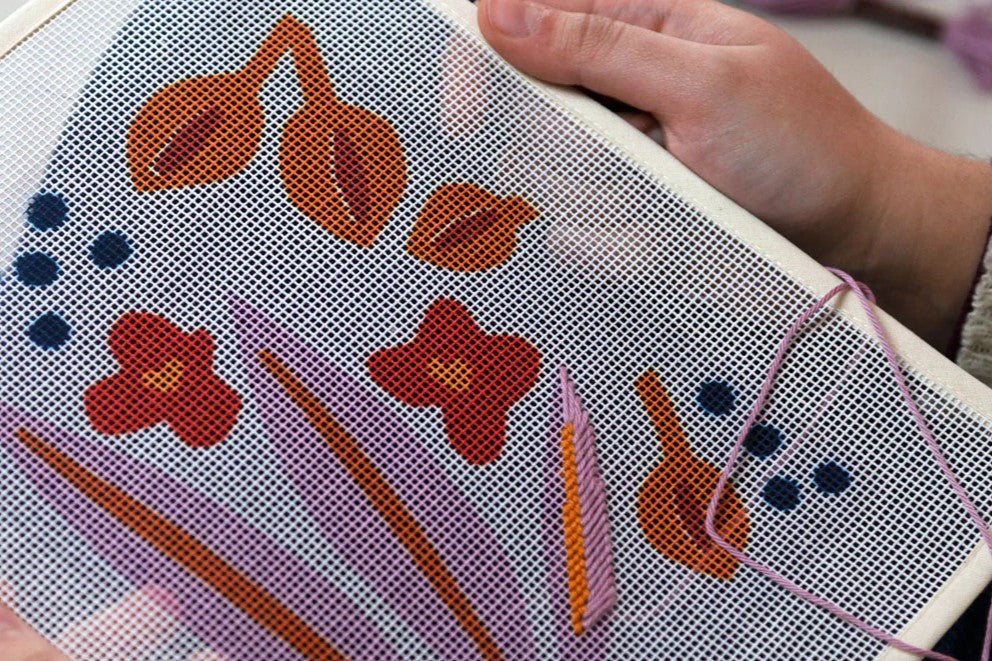
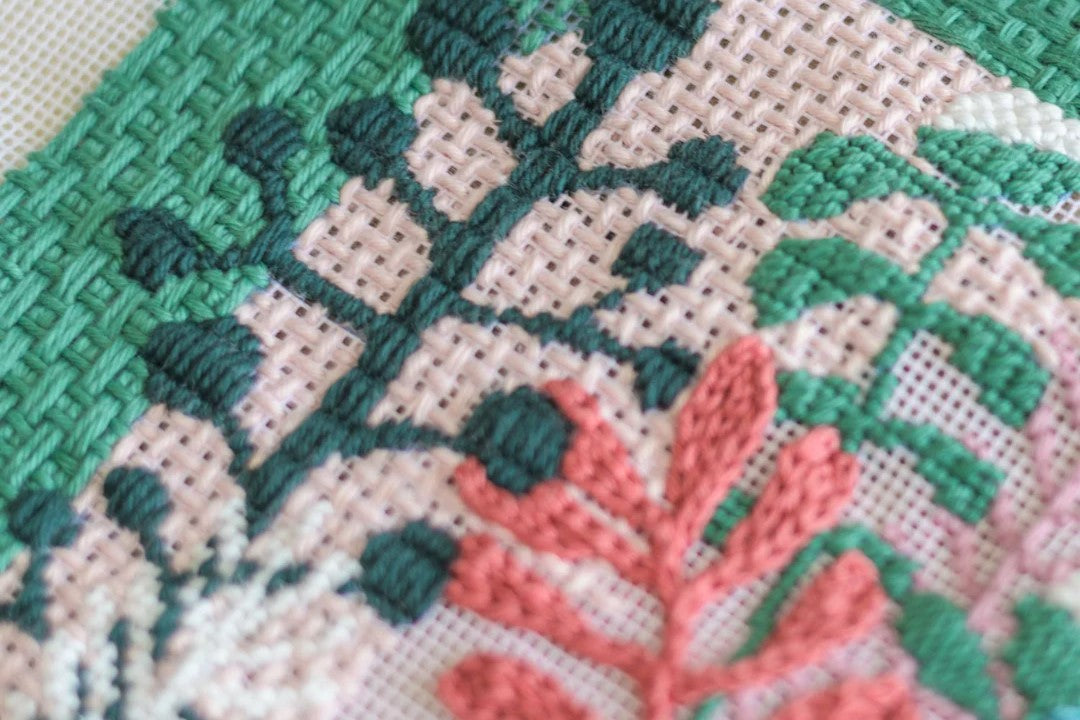
The Tent Stitch is the simplest and most common stitch in needlepoint, and it is the foundation for many other stitches. It is worked as small diagonals, across a single intersection of the canvas.
Understanding Tent Stitch Variations: Coverage, Distortion, and Thread Usage
- Stitch Structure: Flat, Parallel, Diagonal
- Recommended for: Small areas, Background
- Skill level: Beginner
- Can be worked in 3 different ways, each with its own name: Basketweave, Continental, and Half-cross.
- Each variation provides different levels of coverage and structure, and can be chosen taking into consideration the type of wear or finished product, the amount of thread one wants to use, and how much distortion of the canvas we want to avoid. See the table below for more details:
| Stitch Variations | Coverage | Canvas Distortion | Thread Usage |
| Basketweave | Strongest | Very Low | High |
| Continental | Medium | Medium | Medium |
| Half Cross | Weakest | Low | Low |
The Basketweave Stitch: The Gold Standard for Durability
Stitch details:
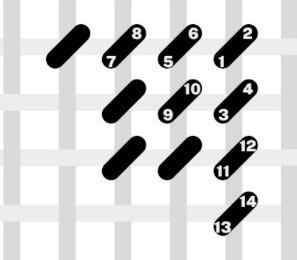
- Basketweave stitches are worked up and down diagonals, and the back of the canvas will show a woven or basket-like pattern.
- It's the tent version that has the minimal distortion of the canvas.
- Recommended stitch for products that might wear a lot, like belts.
- The stitching may look uneven if you work two consecutive rows in the same direction.
Basketweave Stitch Diagram
Basketweave Stitch Video Tutorial
How to achieve a perfect Basketweave Stitch
In this blog post we explain all the tips and tricks to take into consideration to obtain a perfect basketweave stitch! If you are a perfectionist, then this post is for you!
The Continental Stitch: Ideal for Small Areas and Beginners
Stitch details:
- Ideal for stitchers who are learning how to needlepoint.
- A good mnemonic is that when you are working from left to right along the row, the actual stitch is worked from right to left and vice versa.
- The oblique lines on the back of the canvas provide a strong stitch with good coverage.
- Tends to distort the canvas more than basketweave, but it can be solved by blocking your needlepoint canvas.
- For a more textured look, try the Alternating Continental stitch.
Continental Stitch Diagram

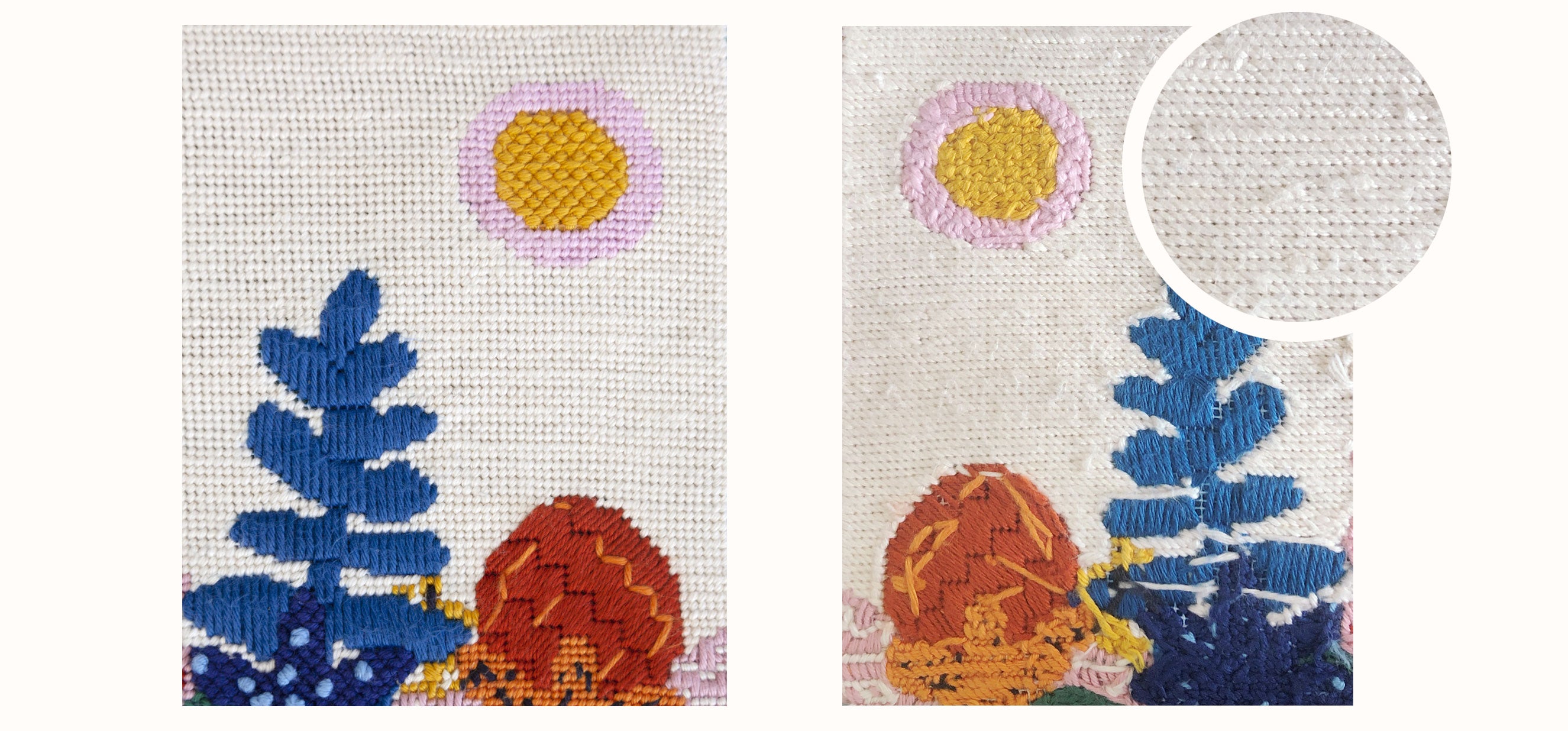
Front and back side of the Continental Tent Stitch, in the "Garden of Joy" Needlepoint Kit
Half-Cross Stitch: When to Save Thread (and When to Avoid It)
Stitch details:
- Looks almost identical to continental tent stitch on the front of the canvas, but on the back is very different, with only small upright threads instead of a dense covering of diagonal stitchery.
- It is not such a strong stitch and is not recommended for any project that will need to wear well, such as a purse or stool top.
- Does not distort the canvas as continental tent stitch does, and uses less thread.
Half Cross Stitch Diagram


Front and back side of the Half Cross Tent Stitch, in the "Contemporary Floral Pattern" Needlepoint Kit
Continental Stitch and Half-Cross Stitch Video Tutorial
Advanced Variations: Exploring Skipped Tent and T-Stitches
Two variations of the Tent Stitch are the Skipped Tent and the T Stitch. These stitches are perfect for a situation where a light stitch is preferable for the background, especially if it is a big area to cover.

Tent Stitch FAQ
What's the difference between tent stitch and basketweave?
Basketweave isn't a different stitch: it is one of the three ways to work the tent stitch, together with continental and half-cross. On the front, all three look like small diagonal stitches. The difference is how they are worked, which shows on the back of the canvas.
Which tent stitch is best for beginners?
Continental is easy to learn and ideal for small areas. For larger areas, basketweave is worth learning too, because it distorts the canvas much less.
Which tent stitch is the strongest?
Basketweave. It gives the strongest coverage and the least canvas distortion, so it's the best choice for items that get a lot of wear, like belts or cushions.
Is half-cross the same as continental?
They look almost the same on the front, but half-cross uses less thread and is much weaker on the back. Avoid it for items that need to wear well, such as purses or stool tops.
Stitch Guides where Tent Stitch is used
See it in action in these needlepoint kit stitch guides:
- Sense & Sensibility Needlepoint Bookmark - Stitch Guide · Shop the kit
- London Stamp Needlepoint Postcard Kit - Stitch Guide · Shop the kit
- Porto Needlepoint Postcard Kit - Stitch Guide · Shop the kit
- Paper Flowers Needlepoint Kit - Stitch Guide · Shop the kit
- Summer Day Needlepoint Kit - Stitch Guide · Shop the kit
- New York Pigeon Needlepoint Bookmark Kit - Stitch Guide · Shop the kit
Browse all our needlepoint kit stitch guides for more ideas.
Now that you know everything about the Tent Stitch, it's time to practice it on your favorite needlepoint project!
Happy Stitching :)